Mitglieder
Wer die Konsole nutzen darf und was: Mitglieder mit ihren Rollen in einem Tab, die Rollen selbst im anderen. Eine Einladung gehört der Person, die sie nennt, und der letzte Eigentümer kann sich nicht selbst entfernen.
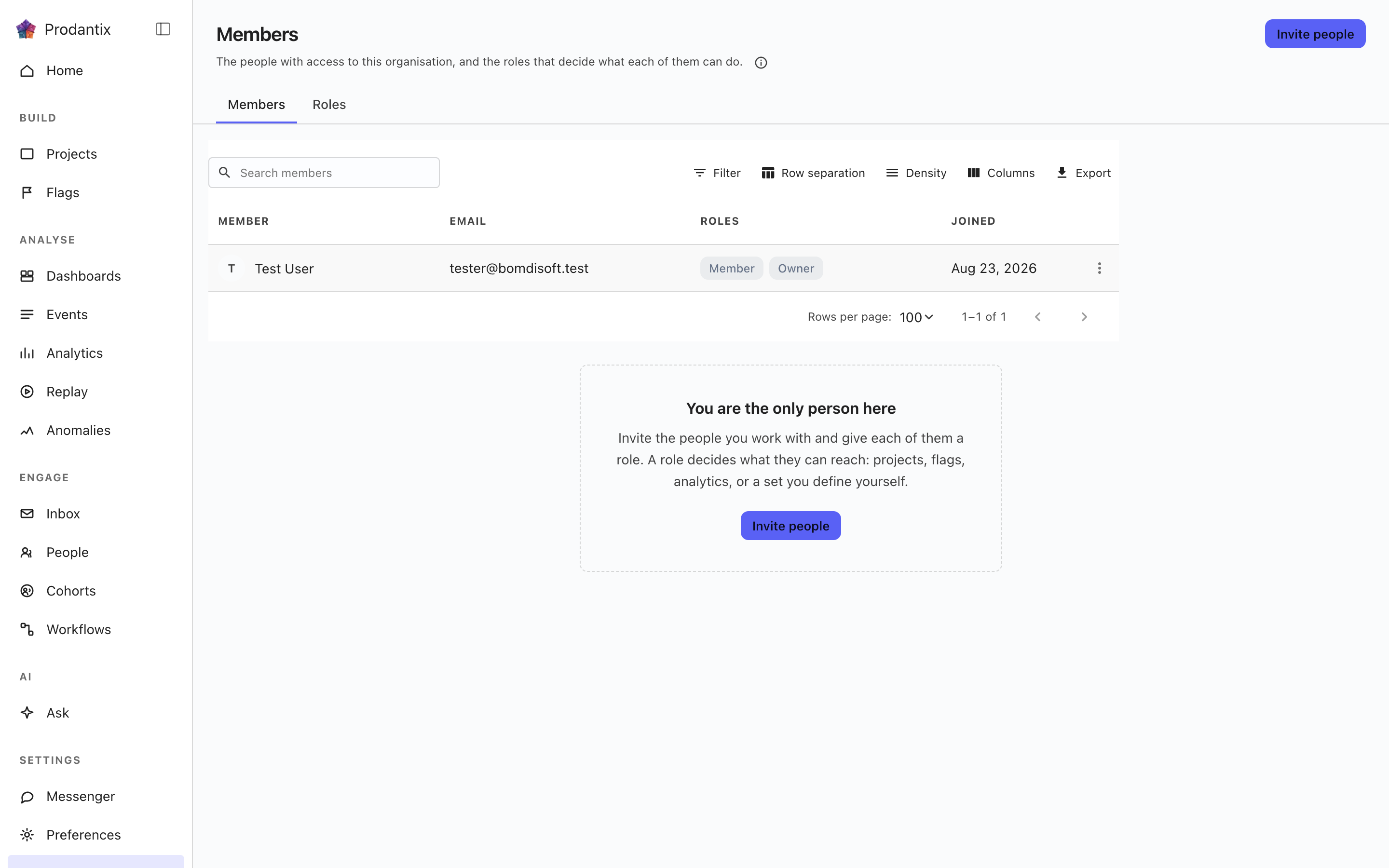
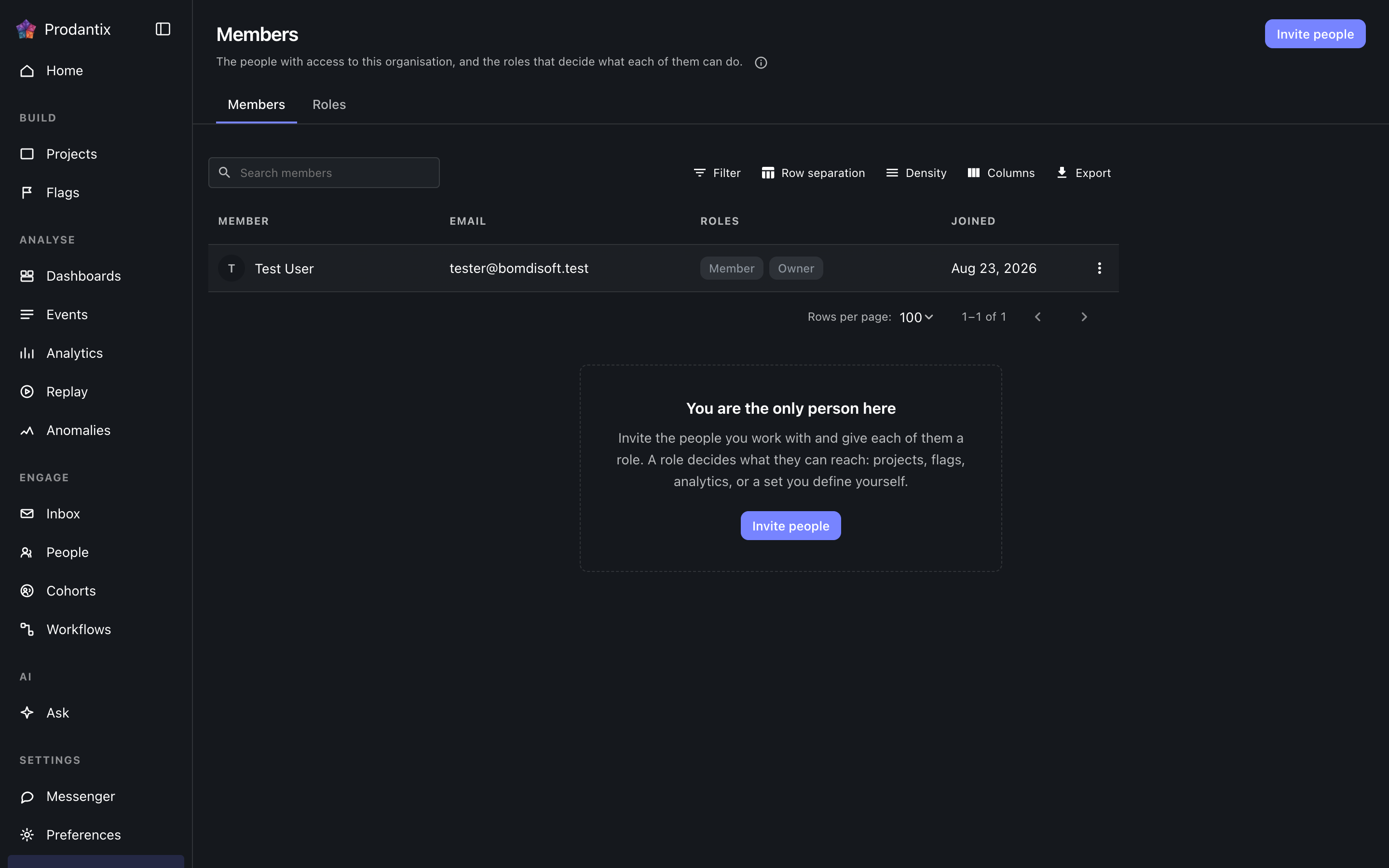
Users
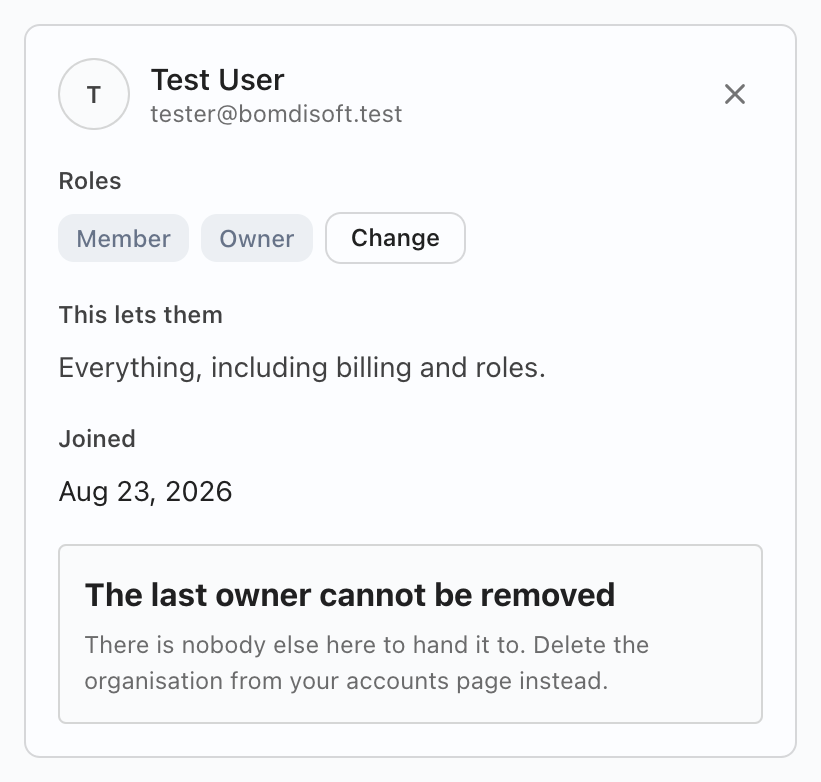
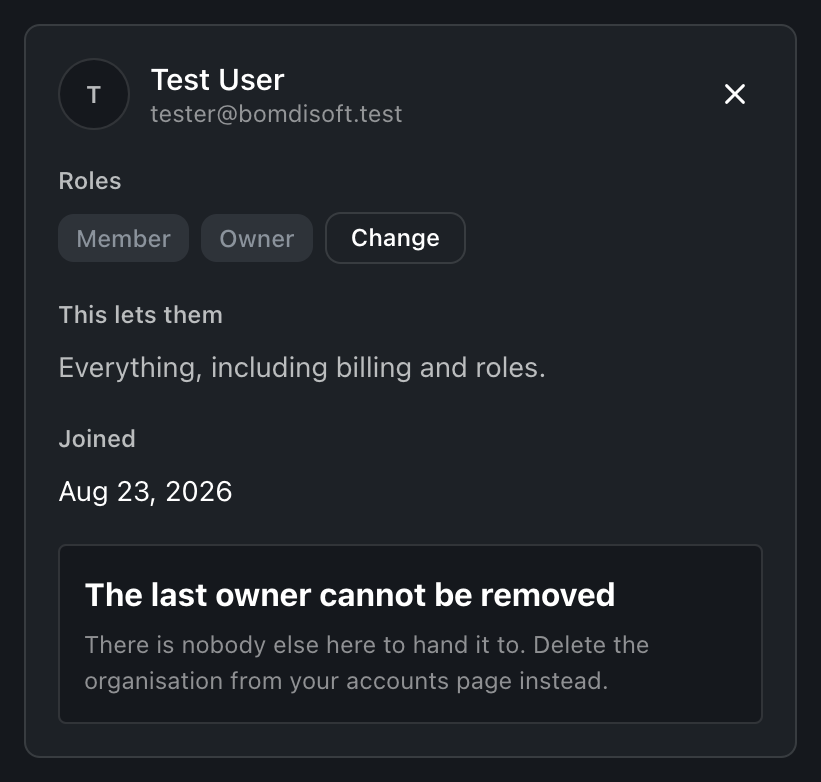
Everyone in the organisation, with their roles and when they joined. Inviting sends an invitation that belongs to the address it names: redeeming it requires signing in as that person, and a token with no address to check is refused rather than waved through. Invitations still pending sit in their own band above the grid, resendable and revocable. Removing a member is guarded by the last-owner rule: an organisation can never be left with nobody who can administer it.
Roles
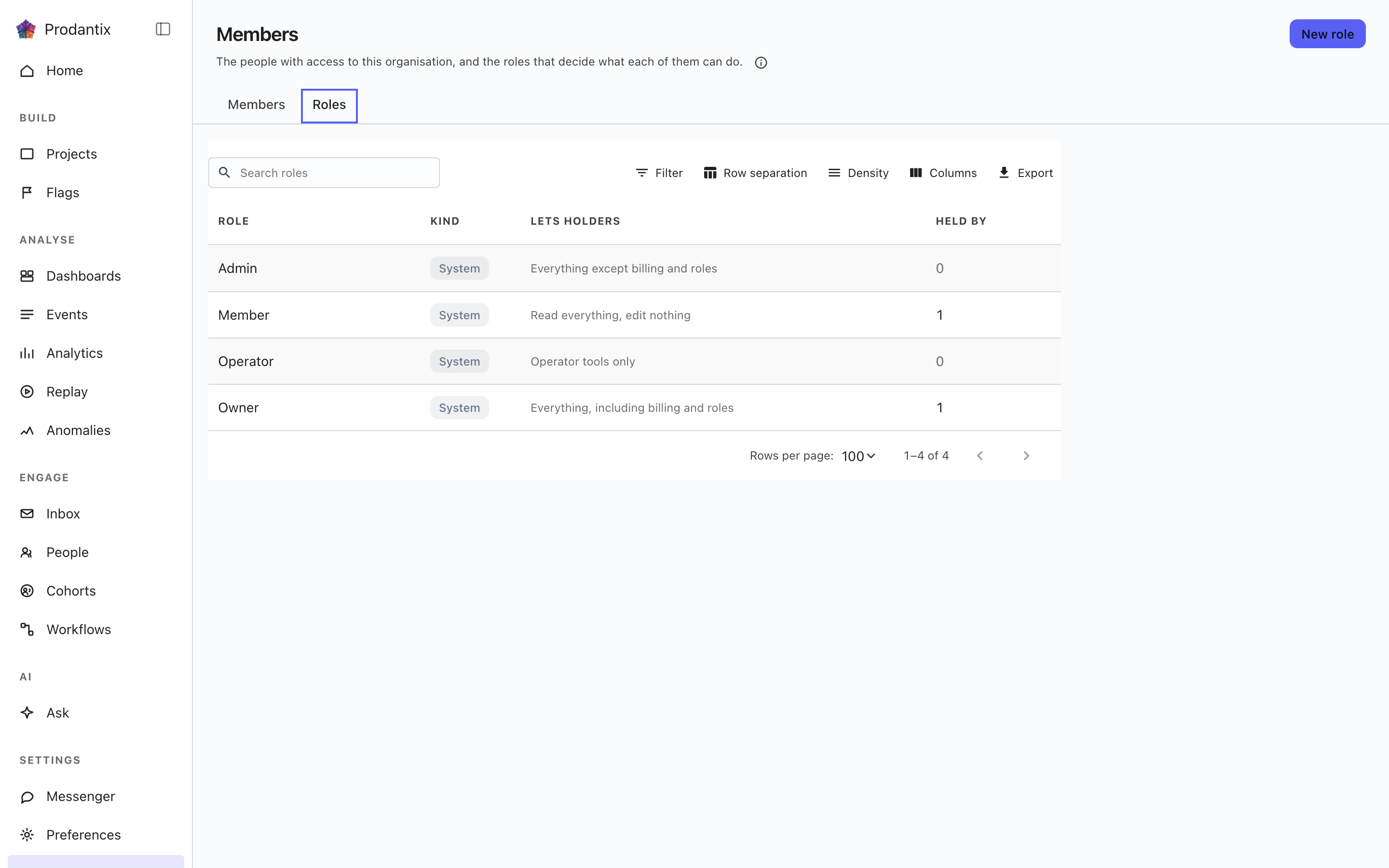
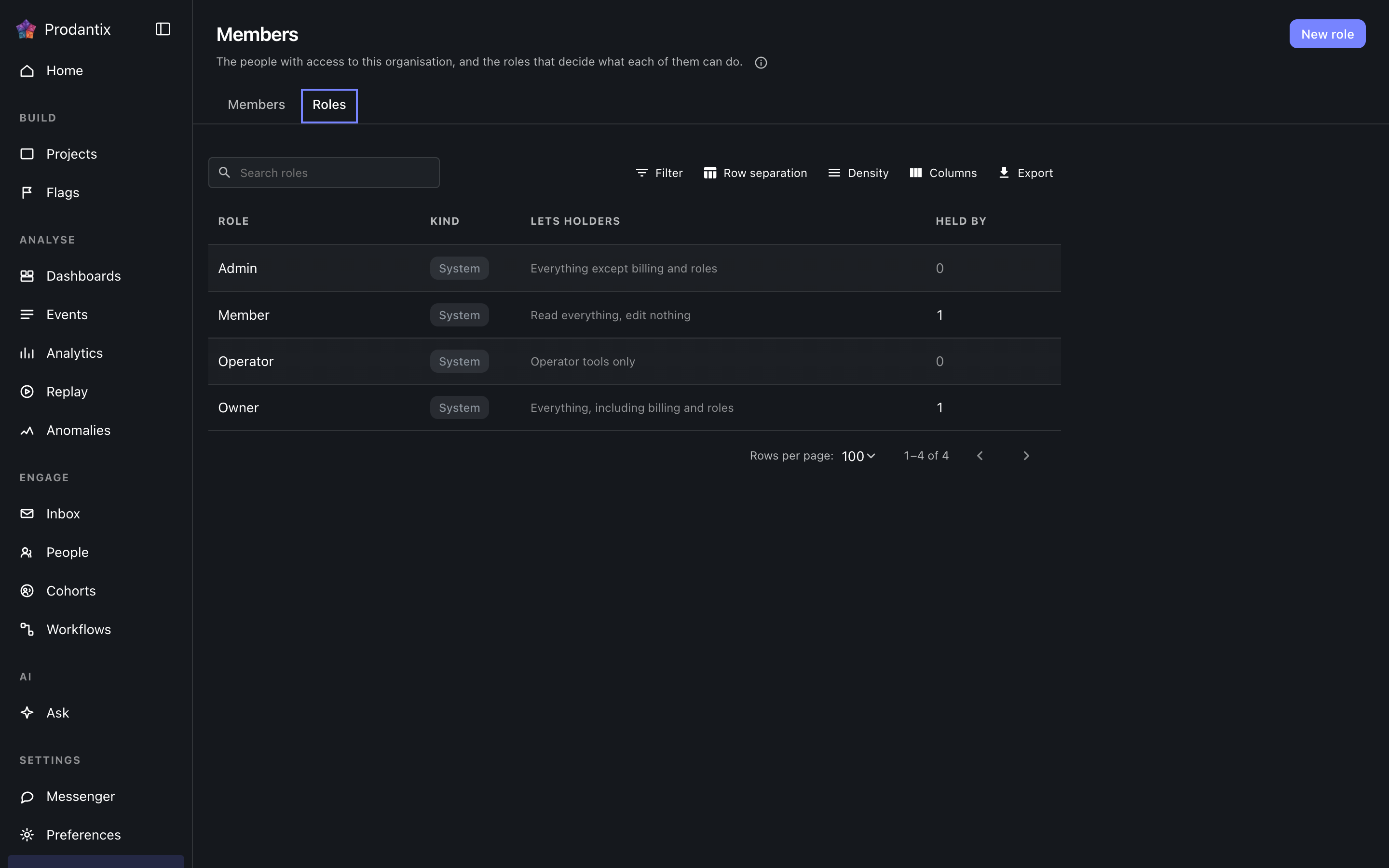
Four system roles ship with every organisation: owner, admin, member and operator. A system role opens read-only, listing every permission it carries, so what a role grants is a fact to inspect rather than a sentence to trust. Custom roles are authored here too, picking exactly the product permissions they should carry, and what a role may delegate follows the delegation rule: an owner can hand on everything, an admin everything except billing and role authoring, and the other roles nothing.
Audit log
The Company page's Audit log tab lists who did what in the company, newest first: sign-ins, members added and removed, roles given and taken away, single sign-on and SCIM changes from Bomdisoft ID, and Prodantix's own keys, signing secrets, exports, plan changes, sign-in rules and project changes. Each row says when, who acted, what they did, whether it applies to the whole company or to Prodantix, and the address it came from. It never names an end user of your product. The tab shows only to owners and admins, who hold the Read the company's audit log permission; a member does not see it at all. The search box narrows the rows by person, sentence or address, and the grid reads the next 500 entries once you reach the last page. When Bomdisoft ID cannot answer, the tab still lists Prodantix's own entries and says the sign-in and member entries are missing for now.
On the wire the log is the auditEvents query (GraphQL reference), at most 500 entries a page, with prodantixBefore and identityBefore carrying each source's cursor to the next page and identityMissing saying when Bomdisoft ID did not answer. Agents read it through the prodantix.company.audit_events tool (MCP tools), under the same permission.
Where this meets the API
On the wire the roster is the organisationMembers query and the caller's own permissions are myGrants (GraphQL reference); roles and invitations are administered through the shared accounts service the whole platform signs in with, which is why a member here is the same identity that holds API credentials elsewhere.