收件箱
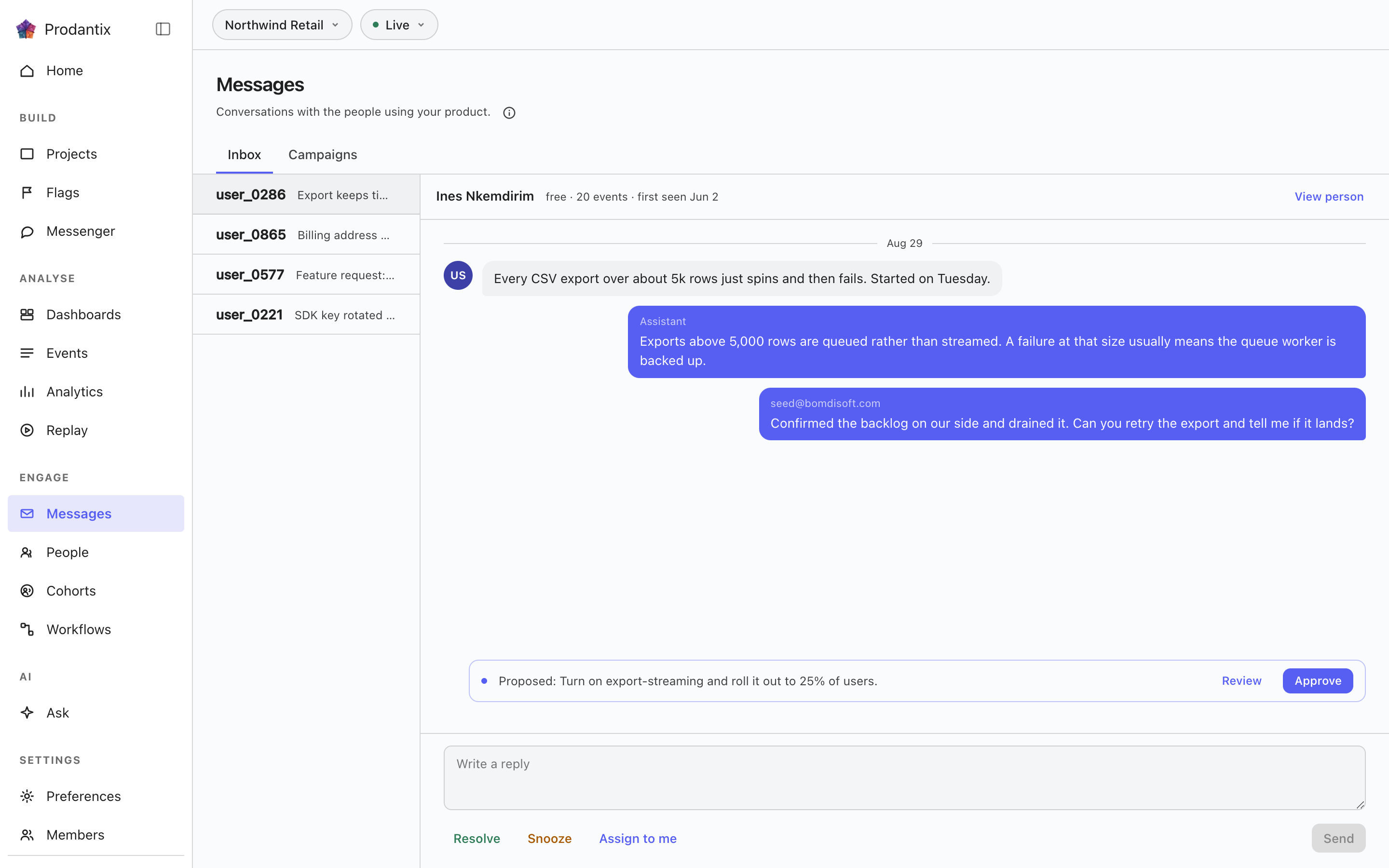
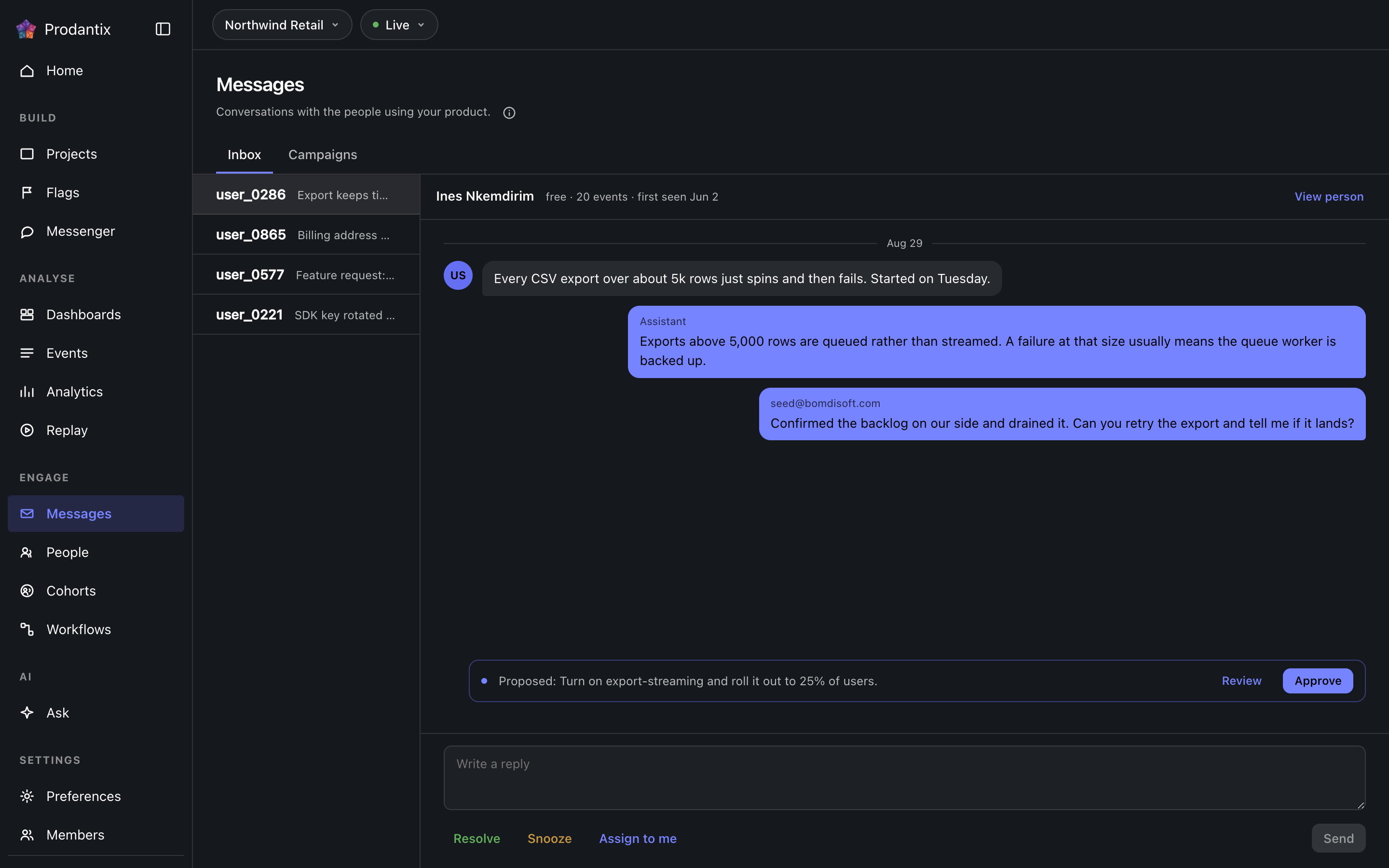
与用户的对话都在这里:一个标签页是会话,另一个是推送活动。每条会话都标明发言者,最终用户、客服或模型,三者不会混淆。
Conversations
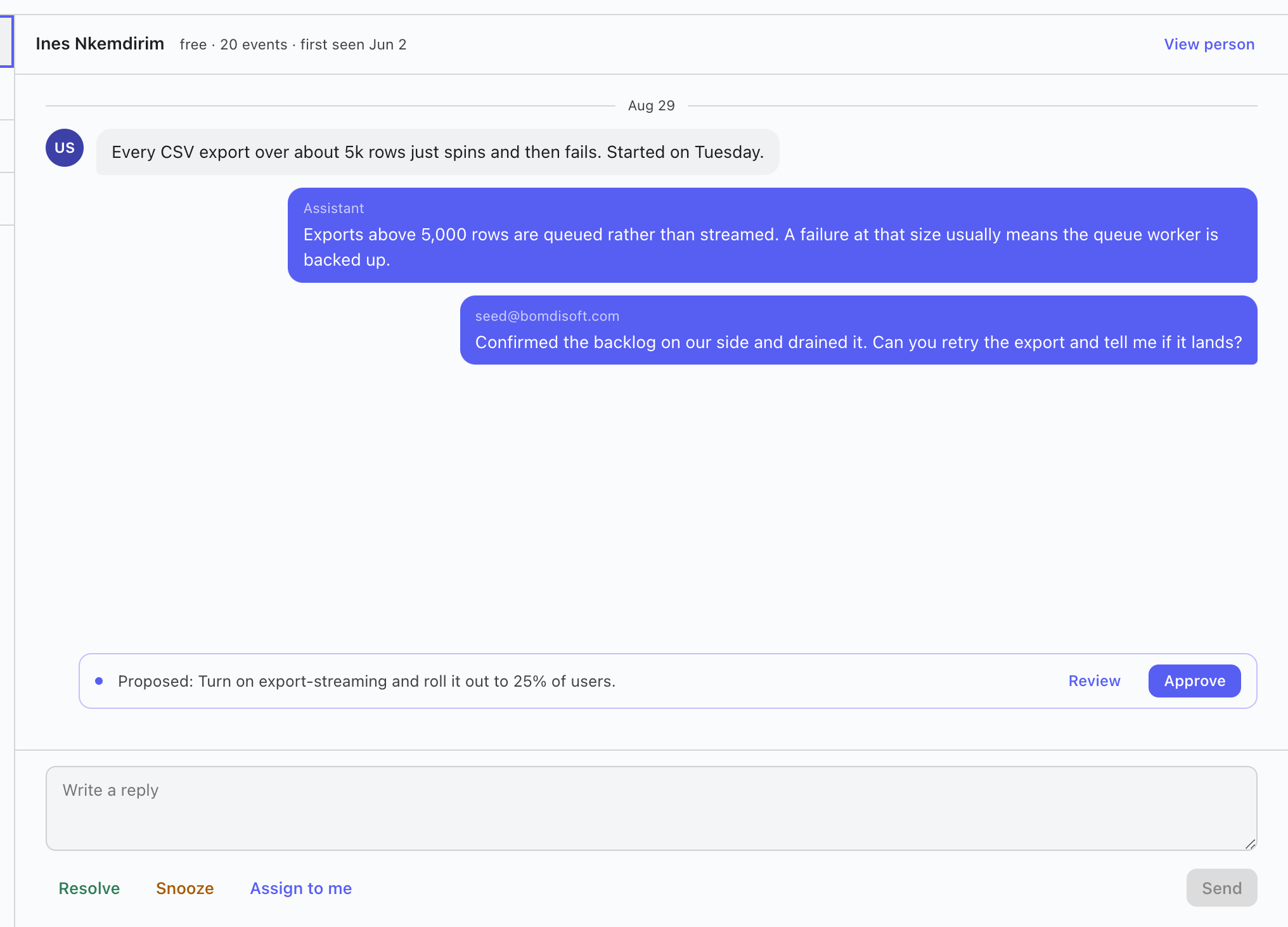
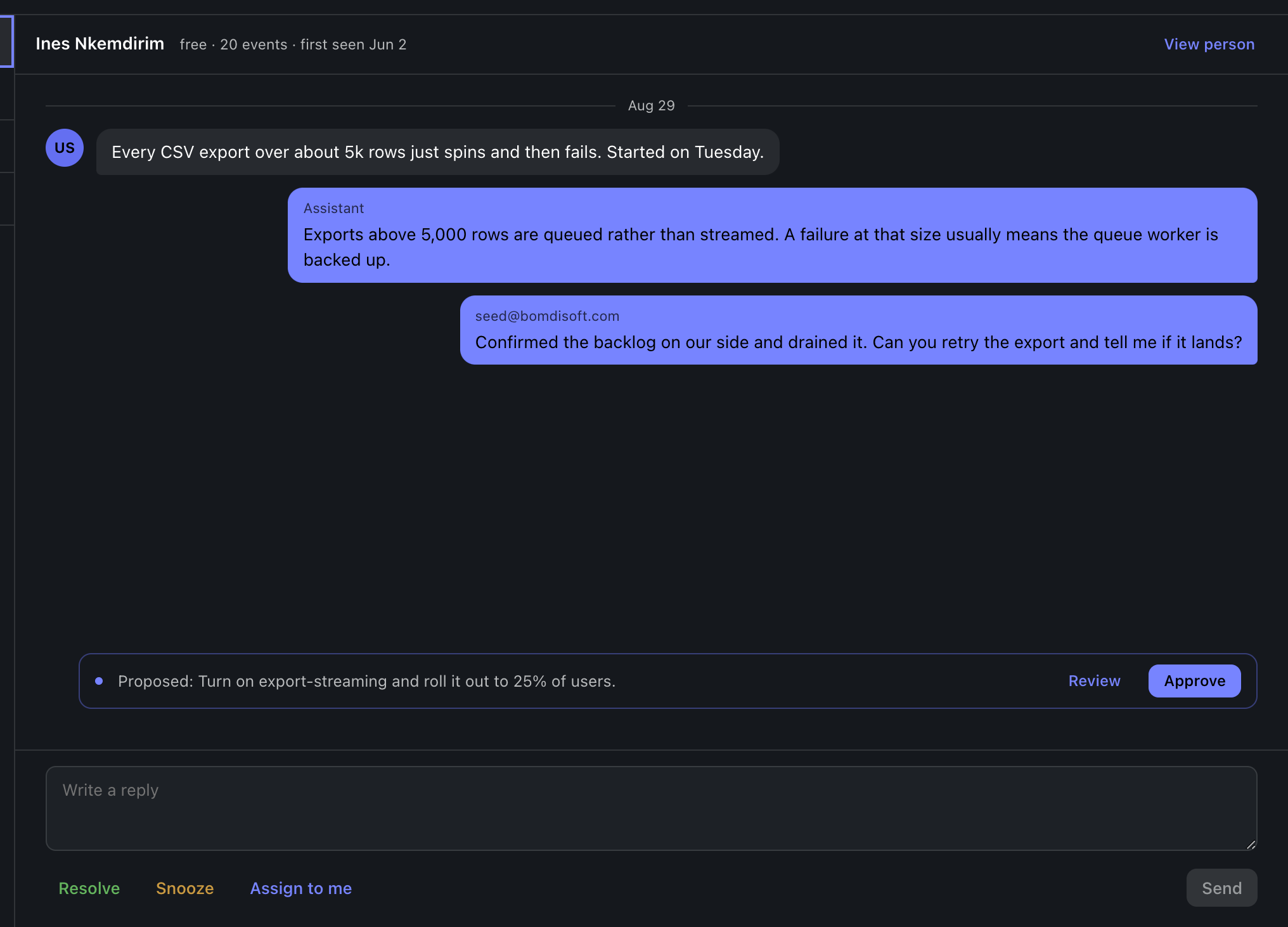
A thread is a person's messages from the Messenger, answered from here. Every turn carries who wrote it: the end user, a named agent, or the model, and the attribution is a database rule rather than a convention, so an assistant turn can never wear a person's name. Threads are open, snoozed or resolved; replying reopens what needs reopening, snooze parks a thread until a date, assignment names whose it is, and new turns stream in live while the thread is on screen.
Working the inbox
Saved views keep a filter over status, priority, assignee and the company's own attributes, each with a count of what it selects now. Macros are saved replies with actions: picking one fills the reply and stages its actions, which run when the reply is sent, or alone with Apply without replying. Undo send holds a reply for the delay a member picks (off, 5, 10, 20 or 30 seconds) so it can be taken back, and Away stops new conversations reaching a member, with the choice to hand back the open ones. A reply a member has started is kept as they type and waits in the same thread on any tab or device until it is sent. The Live tab shows each member's load as it changes.
Details, in the thread's header line, opens a side panel with the conversation's priority, its assignee and the company's own attributes, saved together. A high or urgent conversation says so in words beside the name in the list. Merge moves this conversation's messages, files and ticket links into another conversation with the same person and resolves this one, which stays readable. When the person shares an email with someone else in the project, a Possible duplicate chip names who and offers the People merge, or Not the same person so the pair is never offered again. How new conversations reach the team (manual, round robin or balanced) and each member's assignment limit live on the Assignment tab of Messenger settings.
AI writes a summary of a thread when asked, and translates on demand: Translate under a visitor's message shows the translation inside the same bubble, captioned with the language it came from, and once the visitor's language is known, Translate to that language beside Send turns the reply into it before it goes. A reply sent translated keeps what the member wrote, which the thread shows under it; the visitor sees only the translation.
消息是在哪里写的
来自访客的消息带着它写下的那个页面。正文下方有一行淡色文字,样式与该消息的时间相同,给出主机与路径名,页面标题放在它的提示里,点击这一行会在新标签页里打开那个页面。只有入站消息才有它:客服和模型都是从控制台作答的,给它们任何一方挂上页面,指的都会是控制台而不是访客。在消息助手开始携带页面之前发出的消息,或者来自不发送页面的界面的消息,就是没有这一行。只保存路径名,绝不保存查询串或片段,所以重置或结账链接里的令牌永远不会抵达收件箱。
Sent
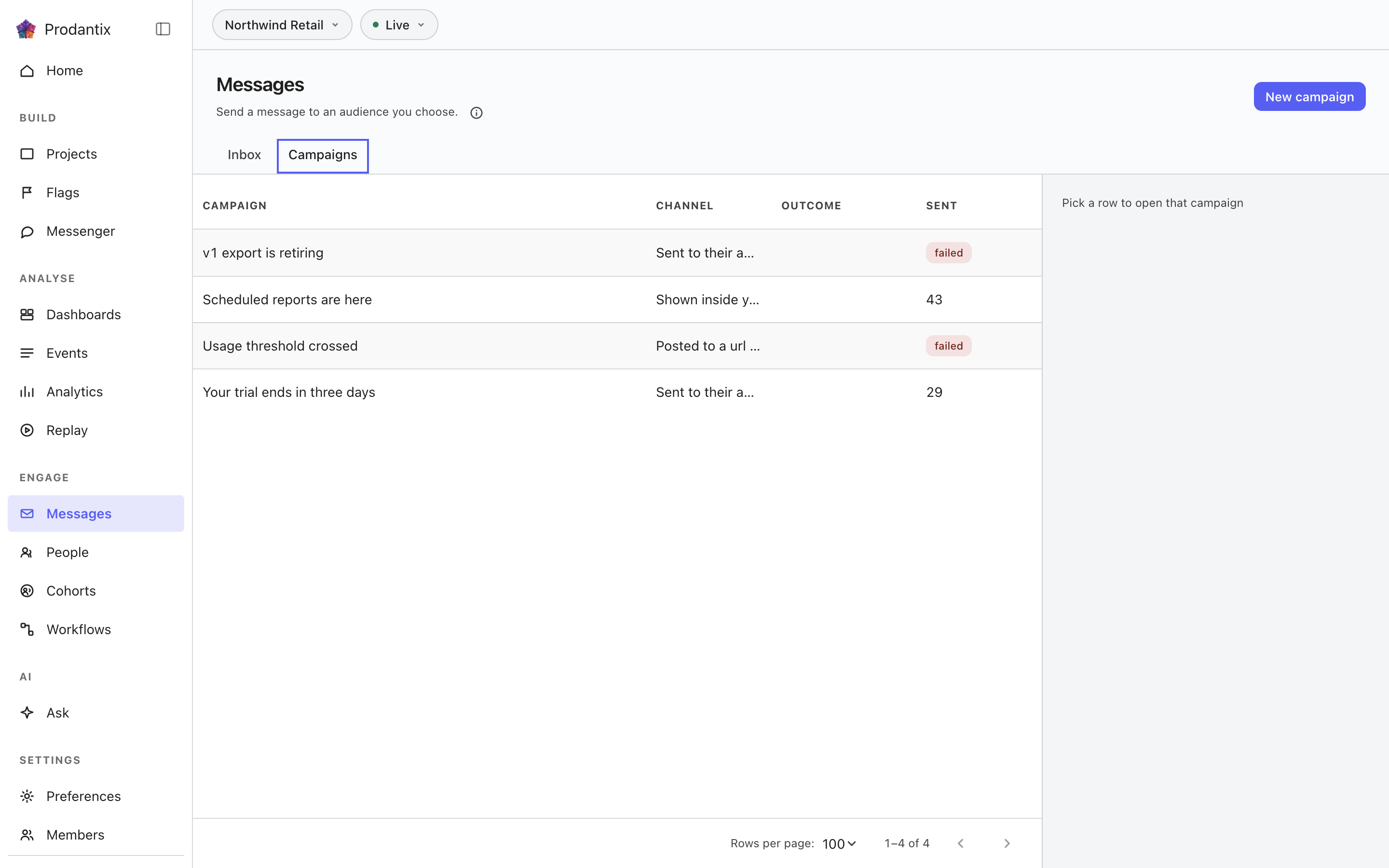
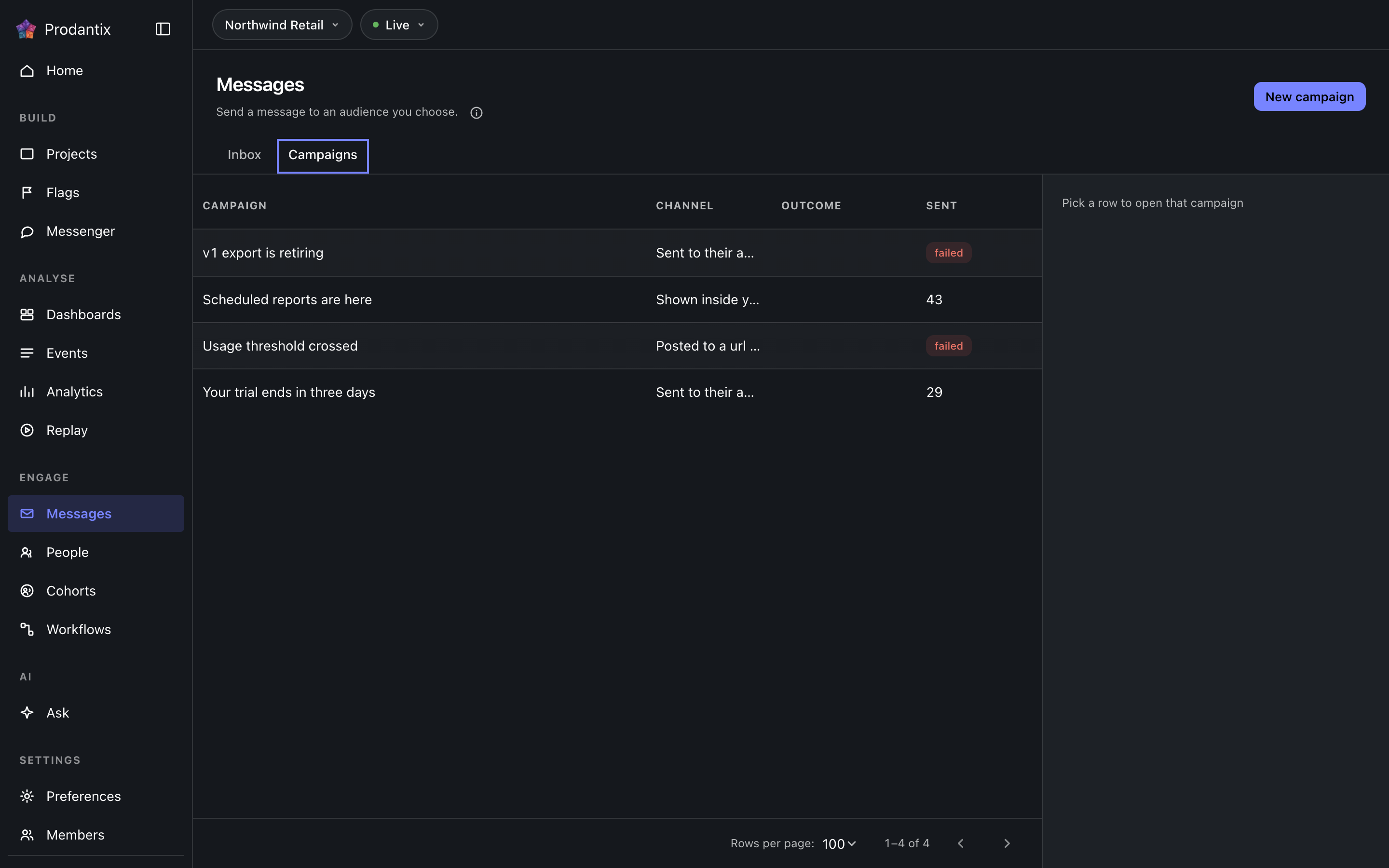
A message sent from here goes to many people at once: in-app, email or webhook, targeted at everyone, a cohort or named people. Each one reports its deliveries by outcome, delivered, read, failed and pending, so a send that half-landed reads as exactly that rather than as done.
Proposals
The model's suggestions review where they point rather than on a tab of their own: a reply drafted for a thread waits in that conversation, a suggestion raised by an anomaly sits under that anomaly on Home, and one about a cohort sits on the cohort itself. Each proposal states its action in a sentence with its fields editable in place, plus its rationale; a person approves, adjusts or rejects it, and the decision is recorded with who made it. Nothing a proposal suggests happens without that approval.
Where this meets the API
The concept is the Messaging pillar. On the wire: threads are conversations and conversationThread, answered through replyToConversation, setConversationStatus and assignConversation, with live turns on the conversationTurns subscription; sent messages are messages and composeMessage; proposals are aiProposals with approveProposal, editProposal and rejectProposal (GraphQL reference). The user side of every thread is the Messenger, configured on its settings screen.