Miradi
Mahali miradi inapotengenezwa na vitambulisho vyake vinapoishi: kila mradi hubeba mazingira ya Live na Test, kila moja na ufunguo wake wa kupokea data na siri ya kusaini. Mzunguko huja na dirisha la neema ili usambazaji uweze kufuata, na siri huonyeshwa mara moja tu, wakati inapotengenezwa.
The grid
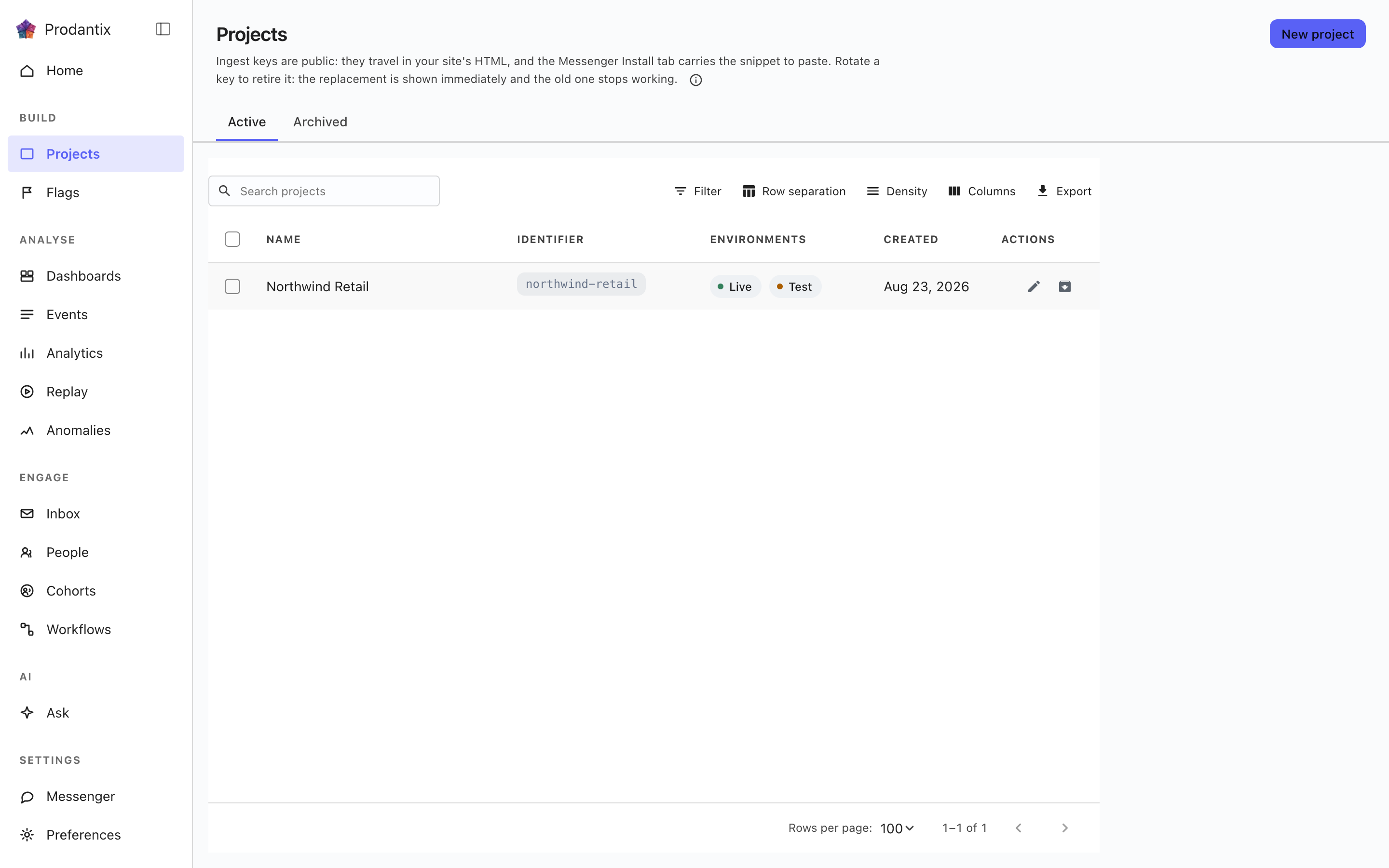
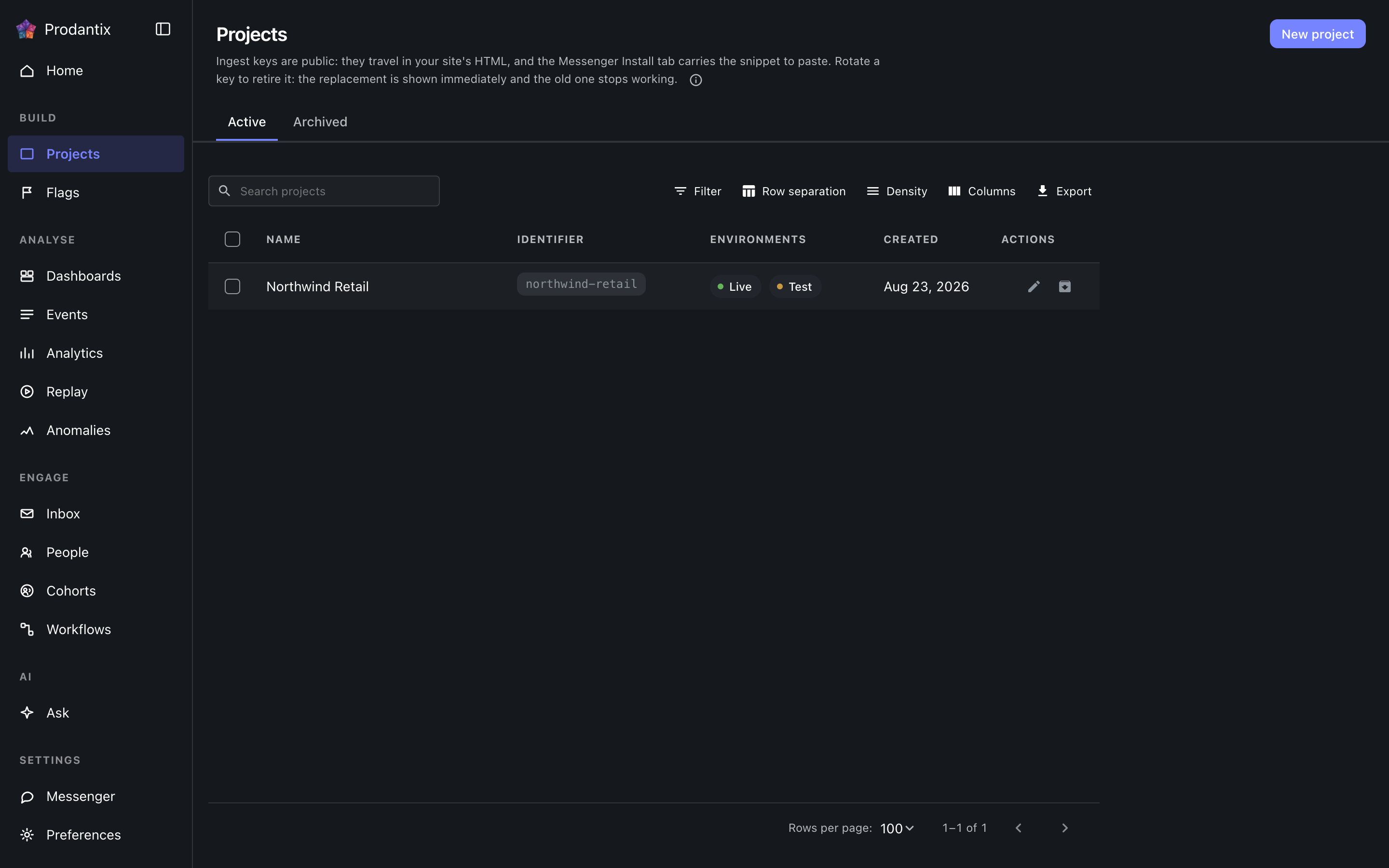
Each row is one project: its name, its identifier chip, which environments it carries, a masked glimpse of its ingest key and when it was made. The Active and Archived tabs split the population, the search narrows by name, and New project opens a dialog that creates the project and reveals both credentials for Live and Test in the dialog itself: the ingest keys, which stay readable on the Messenger Install tab, and the signing secret, which is shown only there.
Renaming and archiving live on the row. Archiving asks for the project identifier to be typed back, because an archived project stops accepting traffic; the Archived tab restores.
Opening a project
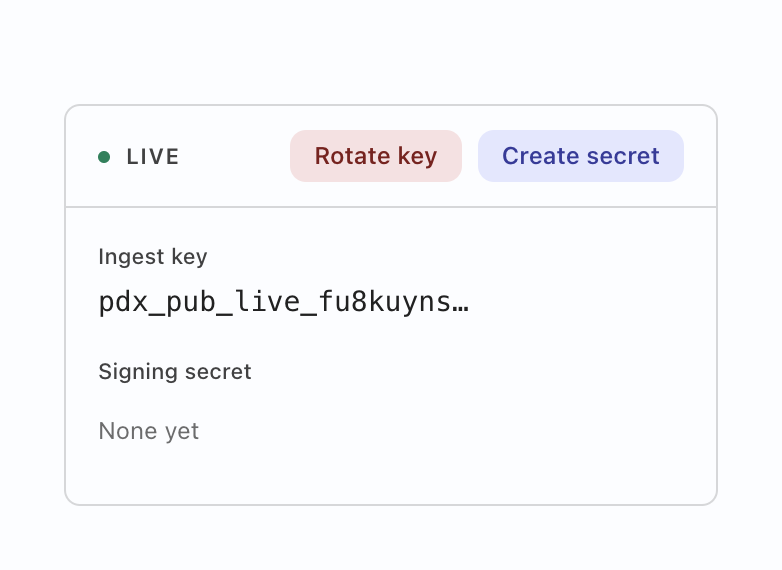
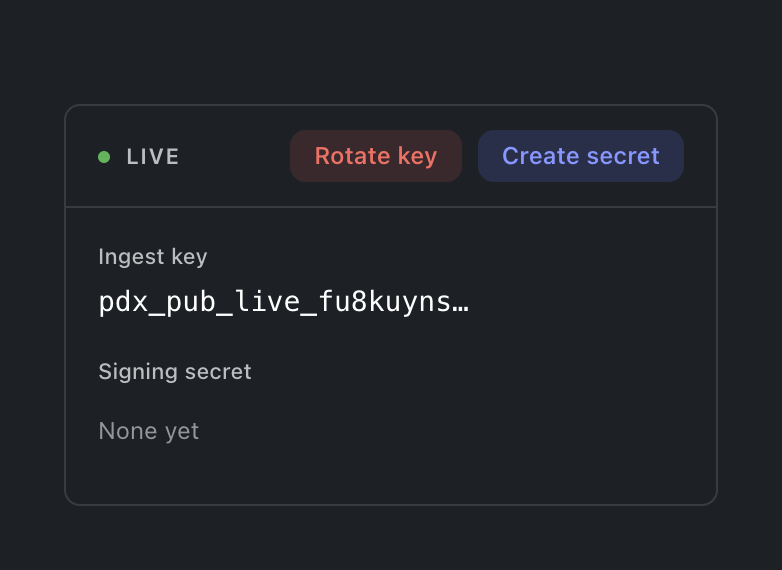
Selecting a row opens the project: a card for the environment the console is in, carrying both credentials labelled. Deliberately not both cards at once: showing the Test key while working in Live is a mix-up waiting to happen, so the other environment's card appears by switching environment. The ingest key is what SDKs send events with; rotating it offers a grace window (immediately, one hour, a day or a week) during which the old key still ingests, so a fleet mid-deploy does not drop events. The signing secret is what the Messenger's identity verification signs with; its action reads Create until one exists and Rotate after. Either mint prints the new value exactly once, and a replaced secret says it replaced one, so an accidental rotation is visible before it bites.
Kumuunganisha mgeni na mtu husika
Swichi moja kwa kila mazingira kwenye kadi ya mradi: Hifadhi shughuli za kabla ya kuingia. Ikiwashwa, shughuli za mtu kabla ya kuingia hubaki zikiwa zake, badala ya kuhesabiwa kama mgeni tofauti. Huanza ikiwa imezimwa, na anayeisoma ni mfanyakazi wa hali, si kivinjari, hivyo hata SDK itume nini, muunganiko hautokei kamwe kwa mradi ambao haujachagua hivyo. Kuizima husimamisha muunganiko unaofuata na hakutenganishi chochote kilichokwisha unganishwa. Mwanachama asiye na ruhusa ya kuandika kwenye mradi huona swichi katika hali iliyomo na hawezi kuisogeza.
Kunakili usanidi
Kila kitu unachosanidi katika mazingira moja kinaweza kunakiliwa kwenda mazingira mengine yoyote ya mradi wowote katika eneo hili la kazi, kwa operesheni moja yenye shabaha kadhaa. Nakili usanidi kwenye ukurasa wa Miradi hufungua kidirisha kikiwa tupu; Nakili kwenda… kwenye kundi, bendera, jaribio, ubao, mtiririko wa kazi au muunganisho hukifungua huku kitu hicho kikiwa tayari kimetiwa alama. Chagua kutoka kwenye mti kile cha kunakili (aina moja huchukua kila kitu kilicho chini yake, na kichujio hupunguza orodha), chagua wapi, kisha pitia shabaha moja baada ya nyingine: kila kitu husema kama kitaundwa, kitaandikwa juu yake, kitabaki kama kilivyo, kinahitaji kitu ambacho shabaha haina (kiongeze au kiondoe kitu chenyewe), au kimekataliwa, na kuandika juu huonyesha kila sehemu inayobadilika kabla ya chochote kuandikwa. Swichi (swichi ya kuhudumia ya bendera, kuwasha na kuzima kwa mtiririko, kuwezeshwa kwa mjumbe, hali ya kuendelea ya jaribio, swichi ya uamilifu ya kundi) husafiri tu pale Nakili pia swichi kwenye ukaguzi ikiwa imewashwa. Shabaha inayohitaji ukaguzi hugeuza bendera zake kuwa maombi ya mabadiliko. Kila shabaha hutekelezwa peke yake, hivyo kukataliwa kwa moja hakuzuii nyingine kamwe.
Where this meets the API
What the keys are for is the Keys guide. On the wire: the listing is the projectGroups query, creation and lifecycle are createProject, renameProject and archiveProject, the credentials rotate through rotateProjectKey and rotateSigningSecret, and the Identity switch reads identityLinkEnabled and writes setIdentityLinkEnabled (GraphQL reference). The ingest key authenticates event ingestion; the signing secret backs Messenger identity verification (Messaging pillar).