Salvo
Onde vive o que guarda da bancada de trabalho, em três separadores. Painéis: cada painel é uma coleção de blocos guardados, e cada bloco volta a executar a sua consulta a cada abertura, por isso os números são vivos e não instantâneos. Relatórios: uma pergunta guardada que vive num painel, com uma descrição e um histórico de versões. Insights: uma pergunta guardada inteira, o seu editor e o seu gráfico, reaberta na bancada com tudo como estava. Todos os separadores pesquisam por nome; os painéis criam-se, mudam de nome, duplicam-se e apagam-se, os relatórios mudam de nome, movem-se, duplicam-se e apagam-se com Undo, e os insights mudam de nome, fixam-se num painel ou apagam-se.
Boards
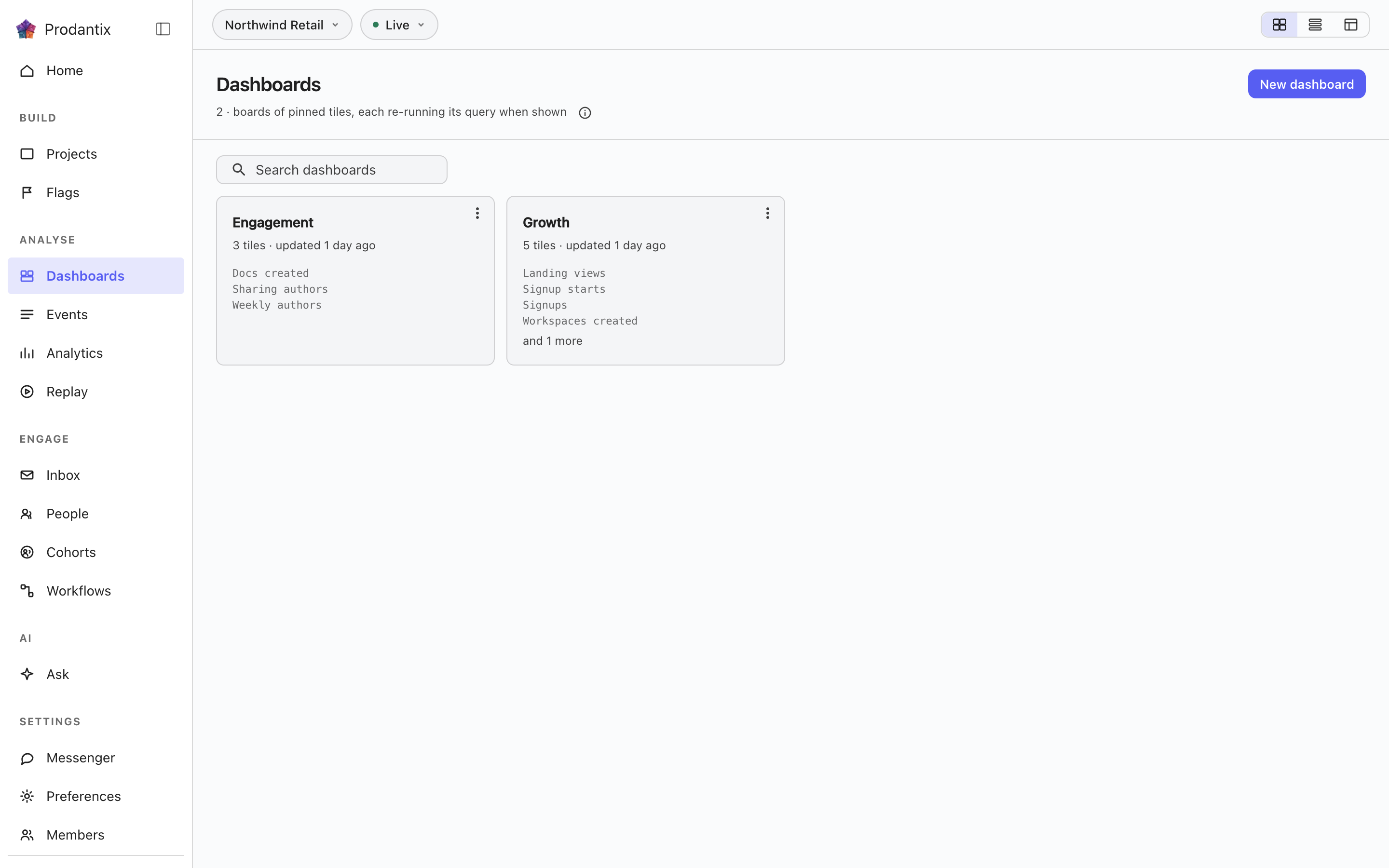
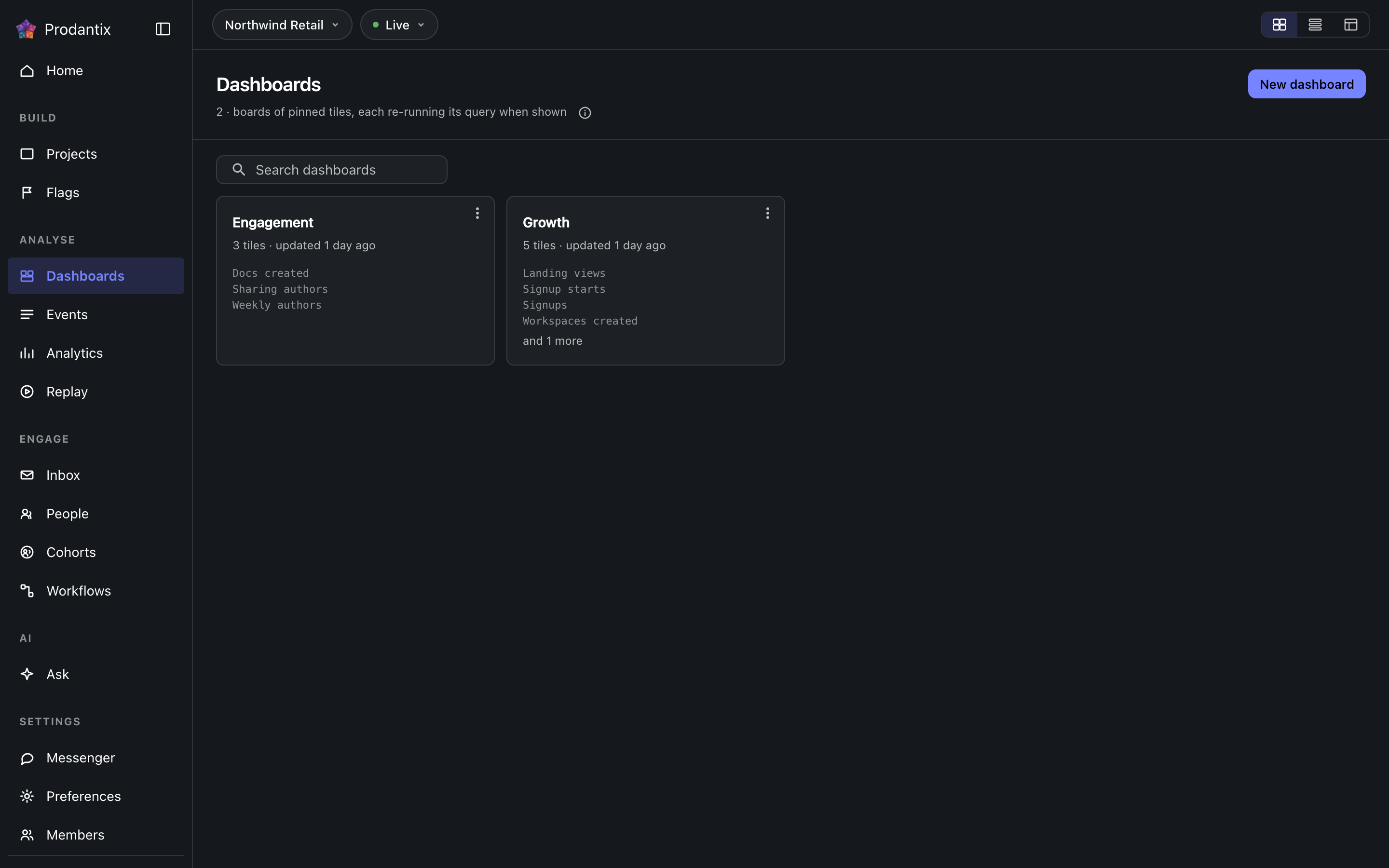
Every board in the project on the Boards tab, searchable by name, with the count in the page head describing the whole library rather than the narrowed view. New board names a board and opens it empty; a board's row menu renames, duplicates or deletes it, and deleting asks first because a board's tiles are the only copy of their saved questions. How the tab presents, as cards, rows or a table, is a stored preference per person, picked on the tab's own bar. Switching arrangements starts on the Growth plan; the Starter plan reads cards.
Reports
Um relatório é uma pergunta guardada que vive num painel, sob um nome e uma descrição, com cada alteração guardada como versão. Guarda-se a partir do menu Save da bancada de trabalho, Save as report, em dois passos: primeiro o nome e a descrição, depois o painel onde vive, escolhido numa lista pesquisável com três linhas de altura e New board por baixo. O separador Reports lista cada relatório do projeto como um cartão: o nome abre-o na bancada, segue-se a descrição, e a linha de meta diz em que painel está, a sua versão e quando foi atualizado pela última vez. A pesquisa corresponde ao nome e à descrição. O menu do cartão abre-o, muda-lhe o nome, move-o para outro painel, duplica-o ou, abaixo do separador, apaga-o. Apagar pergunta primeiro e leva as versões consigo; apagar ou mover acontece de imediato e a snackbar di-lo com Undo, o único caminho de volta, e um relatório apagado é purgado uma hora depois. No seu painel, um relatório é um bloco marcado Relatório com a sua versão, no tom primário, e Open report encabeça o seu menu; um bloco fixado é marcado Insight. Remover o bloco de um relatório do seu painel é apagar o relatório, com o mesmo Undo. Sob o cartão da bancada, a faixa de versões nomeia a versão atual, quem a guardou e quando; Show history desdobra cada versão, o que mudou, por quem e quando, três entradas à vista, com Restore ao lado de cada uma exceto a atual, e um restauro escreve uma nova versão que copia a escolhida em vez de reescrever o histórico.
A board and its tiles
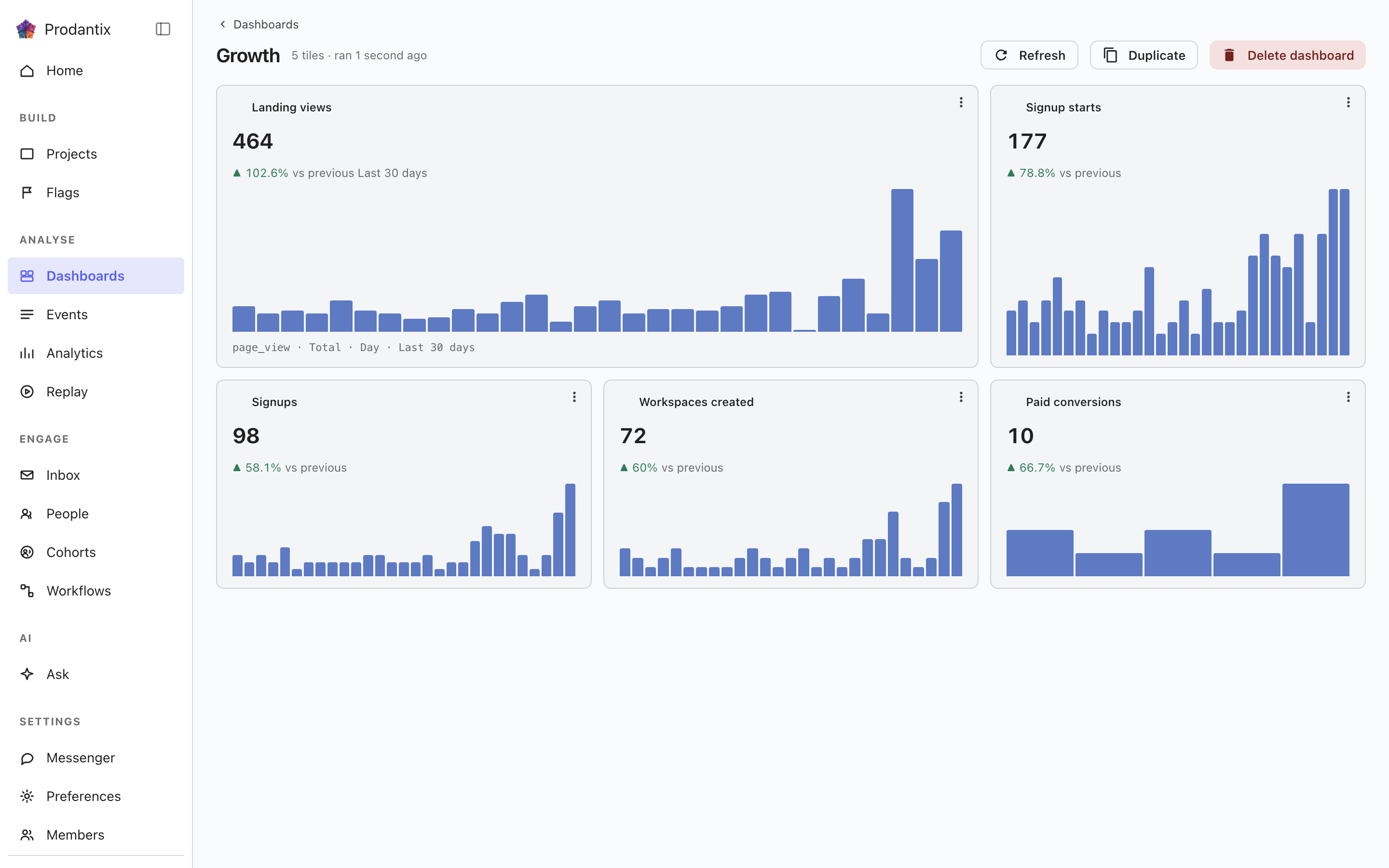
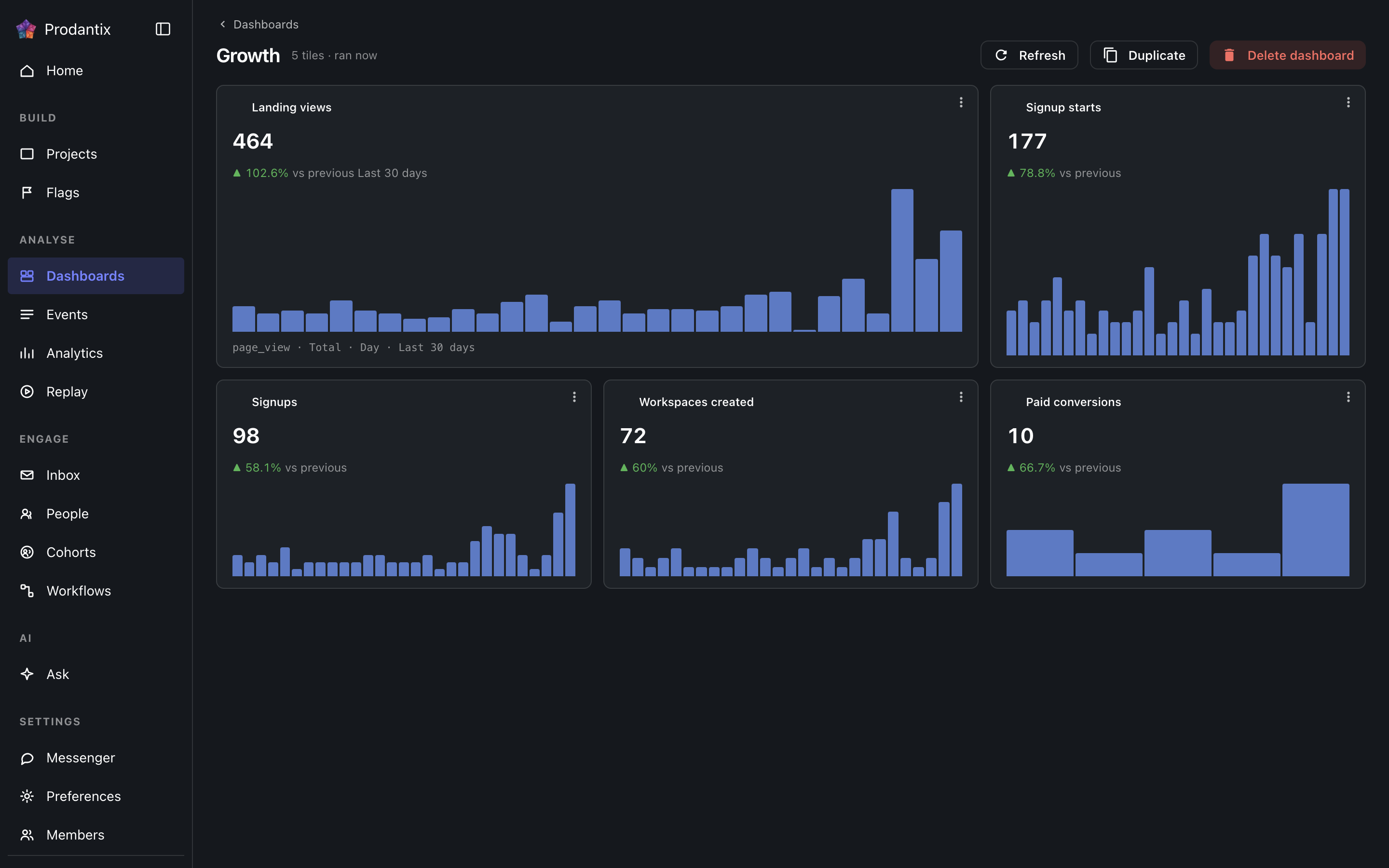
Each tile is one saved question: its title, the current total, a signed delta against the preceding window and a sparkline of the series. Tiles are added by asking a question in the Analytics workbench and pinning the result here; the pin dialog offers every existing board and a new one. A trend tile carries the whole query forward: every metric, any formula, its breakdowns and its compared period, so a re-run always answers exactly what was pinned. A tile that fails to load says so on the tile, with its own retry, rather than poisoning the board; Refresh re-runs every tile at once, and a tile's menu renames it, switches it between standard and wide widths, moves it along the grid, or removes it.
Insights
Um insight é uma pergunta guardada inteira: o editor tal como foi composto, o seu tipo de análise e o tipo de gráfico em que foi lida, sob um nome. Guarda-se a partir do menu Save da bancada de trabalho, As an insight, e reabre-se daqui ou a partir do endereço que a bancada leva como ?insight=, com o editor e o gráfico repostos. O cartão nomeia o tipo de análise num chip, escreve a pergunta em palavras com o seu tipo de gráfico e diz quando foi guardado pela última vez. O seu menu abre-o, muda-lhe o nome, fixa-o num painel como bloco com o seu nome ou apaga-o. Apagar pergunta primeiro, e os painéis que o tinham como bloco mantêm o seu bloco, porque um bloco é a sua própria cópia da consulta. A pesquisa corresponde ao nome e às palavras. Um insight com vigilância leva um chip A vigiar depois do seu nome, no tom de aviso enquanto o seu limite estiver ultrapassado.
Copiar para… na linha abre a cópia de configuração já com este objeto marcado; consulte Projetos, Copiar a configuração.
Where this meets the API
The concept behind the three tabs is the Analytics pillar. On the wire: the Boards tab is the dashboards query, the Reports tab is reports and the Insights tab is insights; boards change through createDashboard, updateDashboard and deleteDashboard (pinning a tile is an updateDashboard carrying the new tile), insights through createInsight, updateInsight and deleteInsight. A report is saved through createReport, read alone through report, changed through updateReport, renameReport, describeReport and moveReport, copied through duplicateReport, deleted through deleteReport and brought back through restoreReport; its history is reportVersions and Restore is restoreReportVersion, which writes a new version copying the chosen one. A report's public link is read through reportPublicLink, turned on or given a new stop day through setReportPublicLink and turned off through turnOffReportPublicLink, and reportShareChanges streams each change; shareReport sends it to teammates, with a note, by email and push. People talk about a report in threads, on the whole report or on one point of it: reportCommentThreads reads them, each with its first comment and latest two replies, reportCommentEarlierReplies reads the replies before those twenty at a time, startReportCommentThread starts one, replyToReportCommentThread answers it, resolveReportCommentThread and reopenReportCommentThread close and open it again, an author changes their own words through editReportComment and deleteReportComment, reactions come and go through addReportCommentReaction and removeReportCommentReaction, and reportCommentChanges streams each change. A report's tile carries only its reportId, and the board read fills the tile from the report, so every tile renders by running its query through runQuery (GraphQL reference). A run that names its report through reportId refreshes that report's public link when the query it ran is the one saved.