Inbox
Dito nakatira ang mga pag-uusap sa mga user: mga thread sa isang tab, mga campaign sa kabila. Sinasabi ng bawat thread kung sino ang nagsalita, isang end user, isang agent o ang model, at hindi maipagkakamali ang tatlo.
Conversations
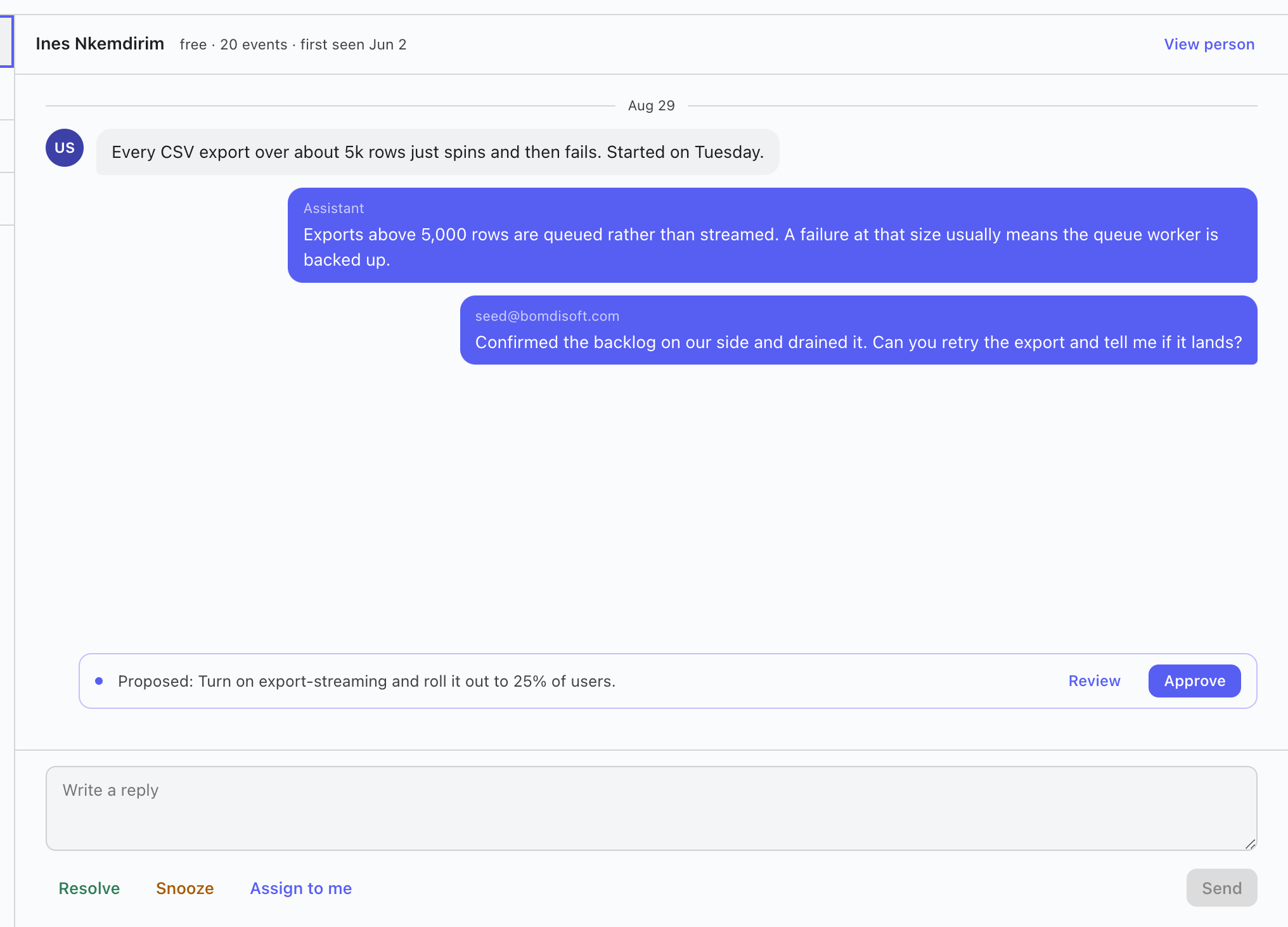
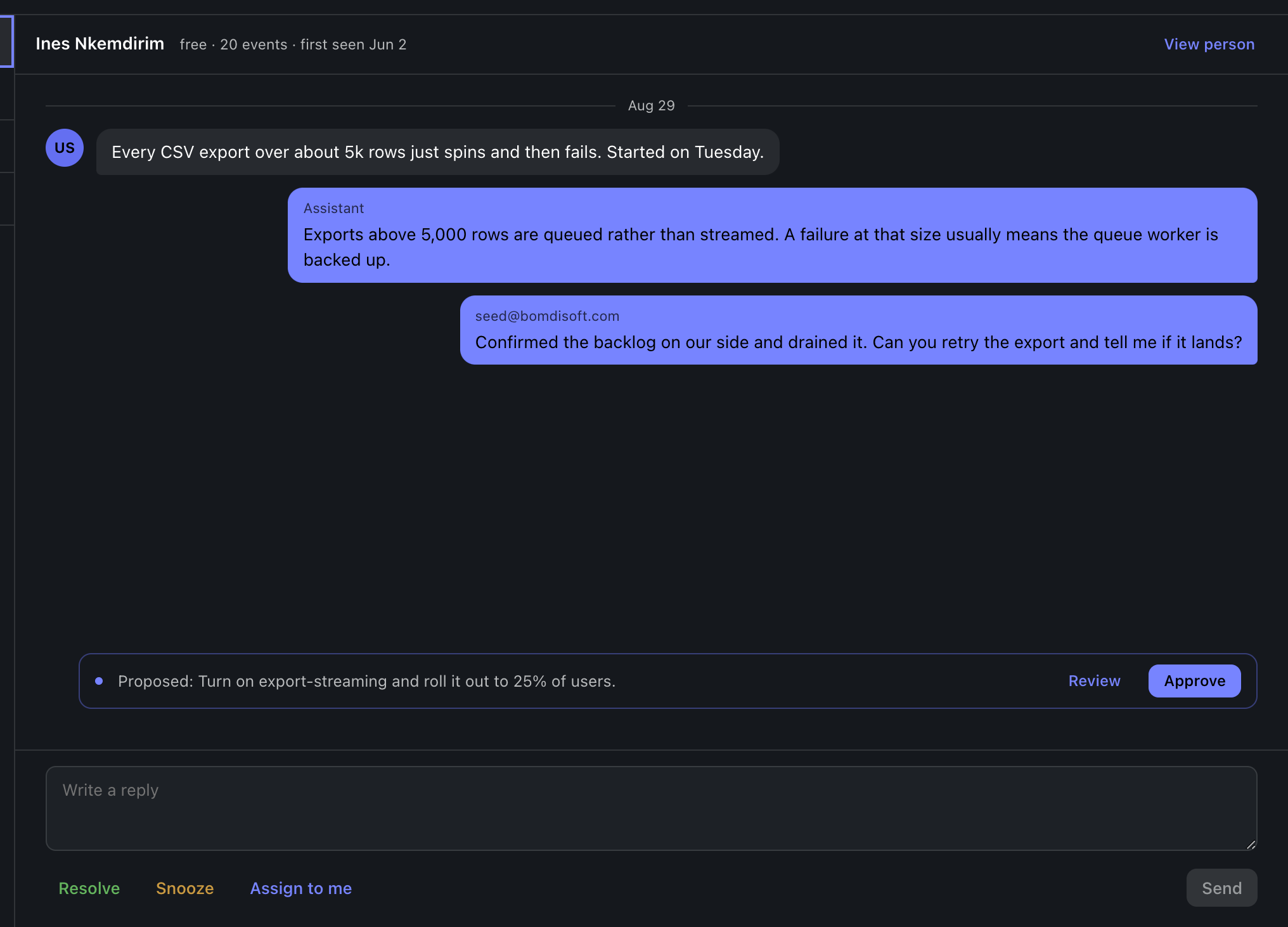
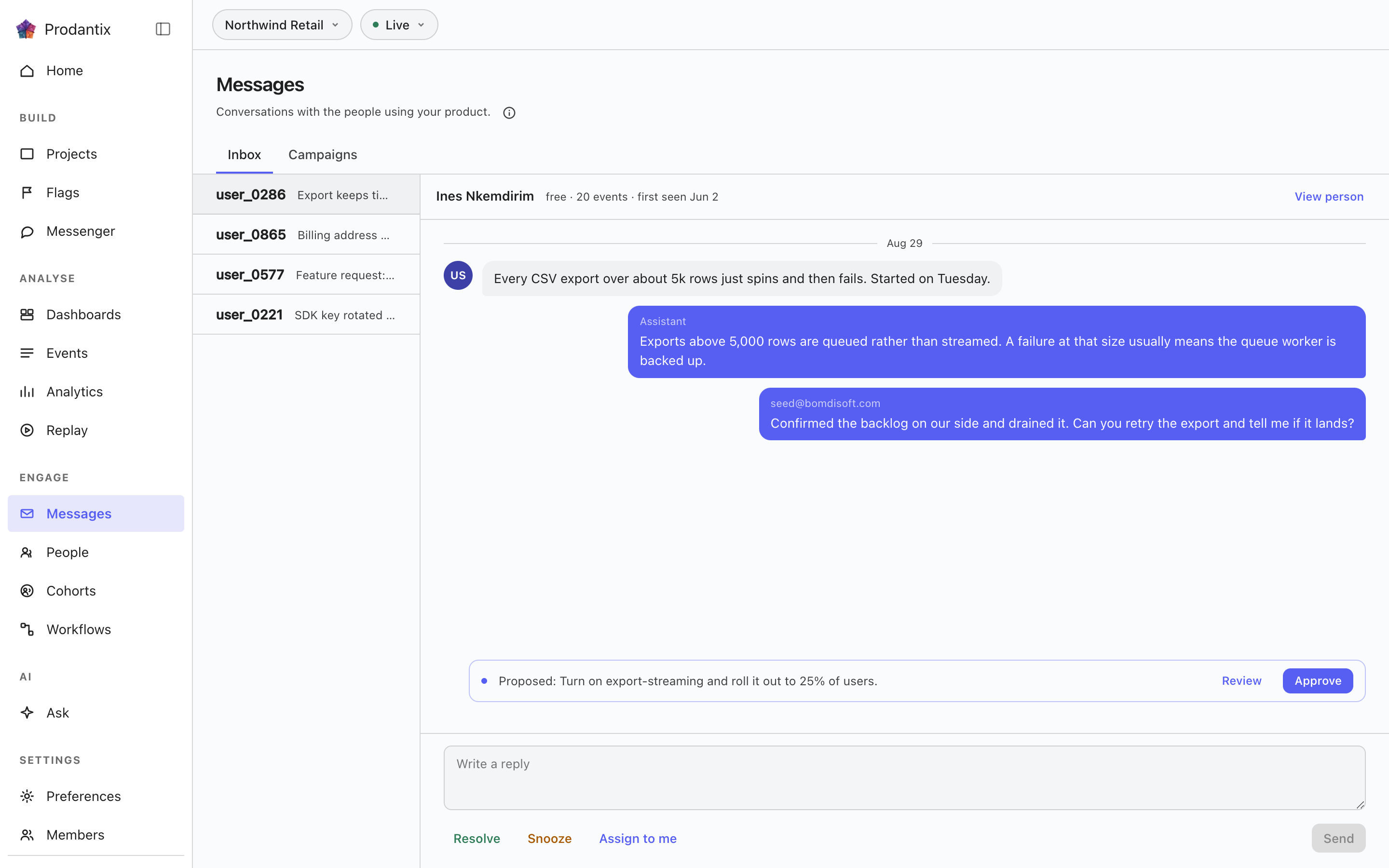
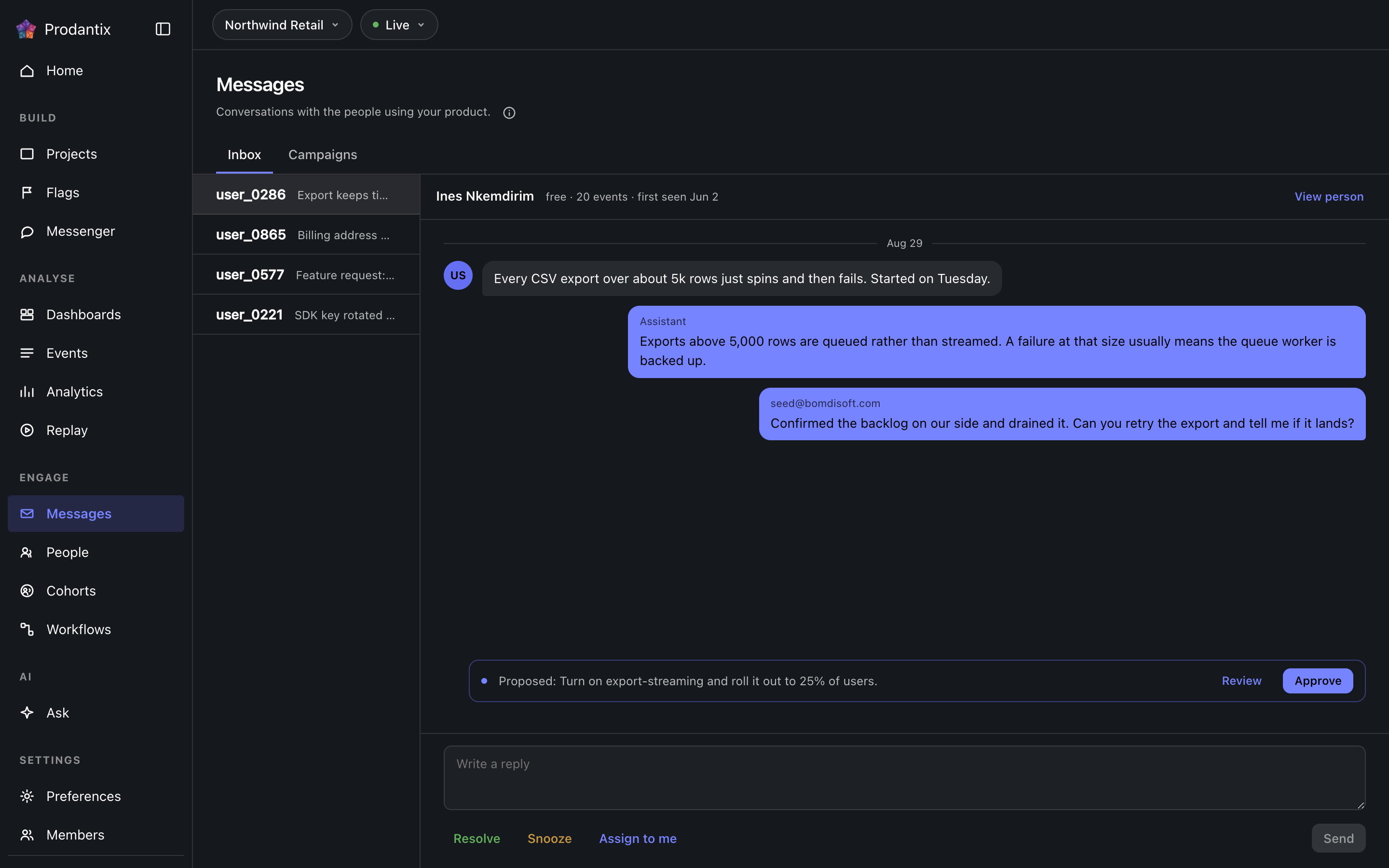
A thread is a person's messages from the Messenger, answered from here. Every turn carries who wrote it: the end user, a named agent, or the model, and the attribution is a database rule rather than a convention, so an assistant turn can never wear a person's name. Threads are open, snoozed or resolved; replying reopens what needs reopening, snooze parks a thread until a date, assignment names whose it is, and new turns stream in live while the thread is on screen.
Working the inbox
Saved views keep a filter over status, priority, assignee and the company's own attributes, each with a count of what it selects now. Macros are saved replies with actions: picking one fills the reply and stages its actions, which run when the reply is sent, or alone with Apply without replying. Undo send holds a reply for the delay a member picks (off, 5, 10, 20 or 30 seconds) so it can be taken back, and Away stops new conversations reaching a member, with the choice to hand back the open ones. A reply a member has started is kept as they type and waits in the same thread on any tab or device until it is sent. The Live tab shows each member's load as it changes.
Details, in the thread's header line, opens a side panel with the conversation's priority, its assignee and the company's own attributes, saved together. A high or urgent conversation says so in words beside the name in the list. Merge moves this conversation's messages, files and ticket links into another conversation with the same person and resolves this one, which stays readable. When the person shares an email with someone else in the project, a Possible duplicate chip names who and offers the People merge, or Not the same person so the pair is never offered again. How new conversations reach the team (manual, round robin or balanced) and each member's assignment limit live on the Assignment tab of Messenger settings.
AI writes a summary of a thread when asked, and translates on demand: Translate under a visitor's message shows the translation inside the same bubble, captioned with the language it came from, and once the visitor's language is known, Translate to that language beside Send turns the reply into it before it goes. A reply sent translated keeps what the member wrote, which the thread shows under it; the visitor sees only the translation.
Kung saan isinulat ang mensahe
Ang turn na galing sa tao ay may dalang pahinang pinagsulatan niya. Sa ilalim ng katawan, isang mahinang linya na kapareho ng estilo ng oras ng turn ang nagbibigay ng host at ng pathname, nasa tooltip nito ang pamagat ng pahina, at binubuksan ng linya ang pahinang iyon sa bagong tab. Papasok na turn lang ang may ganito: parehong sumasagot mula sa console ang ahente at ang modelo, kaya ang pahina sa alinman sa kanila ay magpapangalan sa console at hindi sa bisita. Ang mensaheng ipinadala bago pa nagdala ng pahina ang messenger, o mula sa surface na walang ipinapadala, ay basta walang linya. Ang pathname lang ang iniingatan, hindi kailanman ang query o ang fragment, kaya hindi kailanman nakakarating sa inbox ang token sa isang reset o checkout na link.
Sent
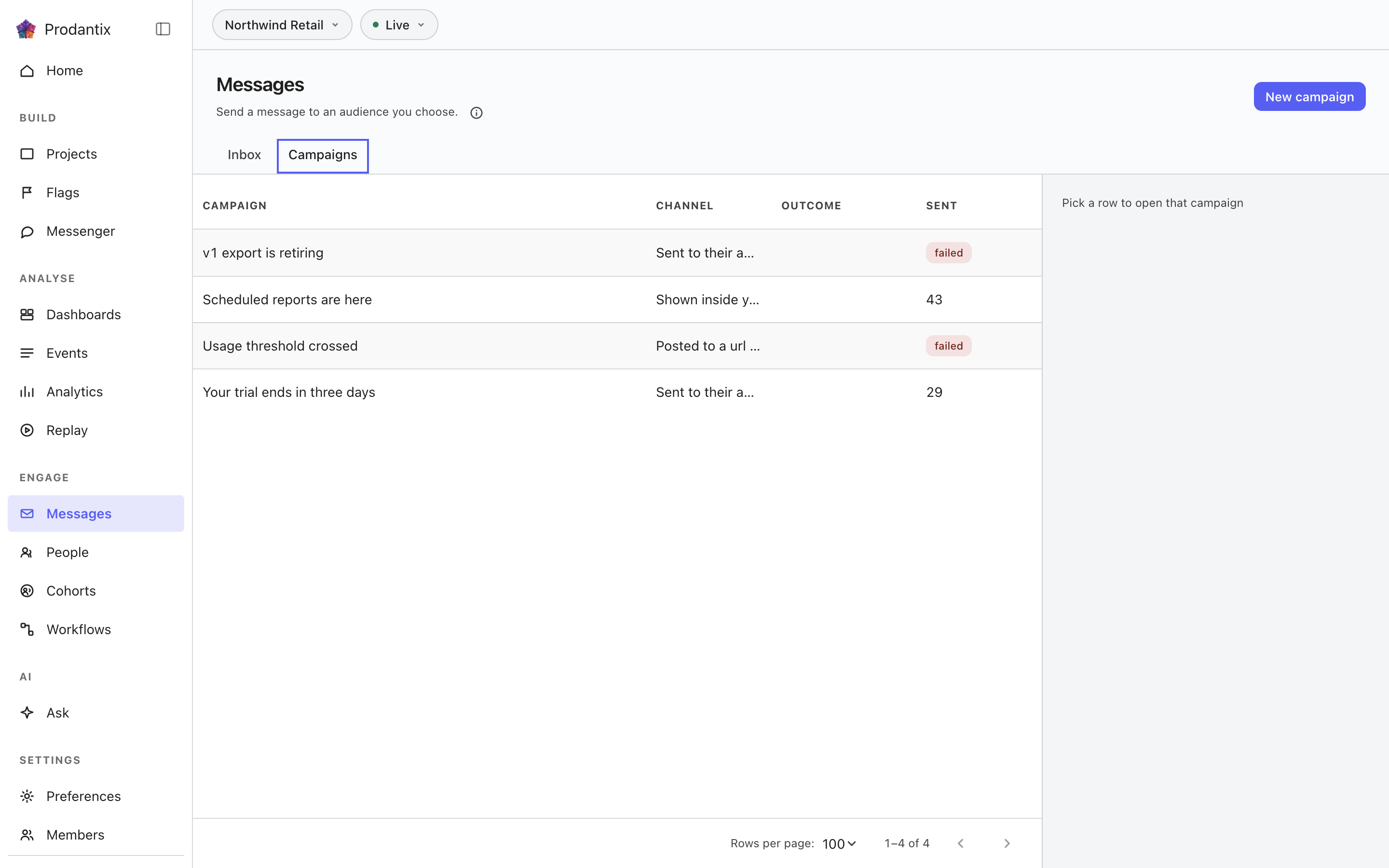
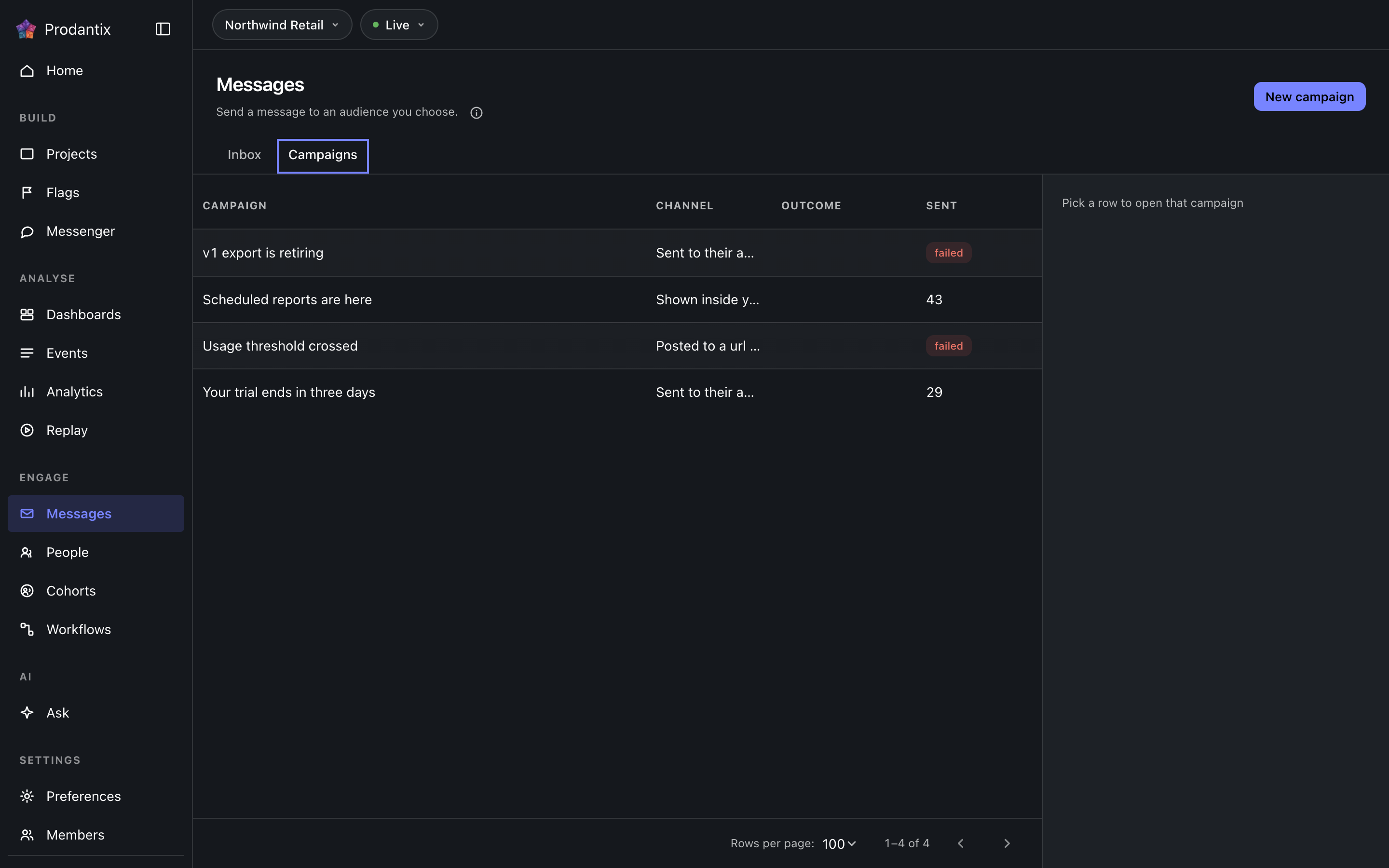
A message sent from here goes to many people at once: in-app, email or webhook, targeted at everyone, a cohort or named people. Each one reports its deliveries by outcome, delivered, read, failed and pending, so a send that half-landed reads as exactly that rather than as done.
Proposals
The model's suggestions review where they point rather than on a tab of their own: a reply drafted for a thread waits in that conversation, a suggestion raised by an anomaly sits under that anomaly on Home, and one about a cohort sits on the cohort itself. Each proposal states its action in a sentence with its fields editable in place, plus its rationale; a person approves, adjusts or rejects it, and the decision is recorded with who made it. Nothing a proposal suggests happens without that approval.
Where this meets the API
The concept is the Messaging pillar. On the wire: threads are conversations and conversationThread, answered through replyToConversation, setConversationStatus and assignConversation, with live turns on the conversationTurns subscription; sent messages are messages and composeMessage; proposals are aiProposals with approveProposal, editProposal and rejectProposal (GraphQL reference). The user side of every thread is the Messenger, configured on its settings screen.